A bilingual film-criticism magazine with its own studio.
A Persian-first editorial site for film and series reviews, with an English edition and a custom content studio behind it. Metadata is pulled automatically; writers only write.


A film critic needed a home for long-form reviews that respected Persian typography and looked like a magazine, not a blog template.
We built the site and the studio behind it together. A writer types a title; posters, cast, crew and ratings are fetched for them. The reader gets a full-bleed cover story, generous right-to-left type, and an English edition that shares the same catalogue.
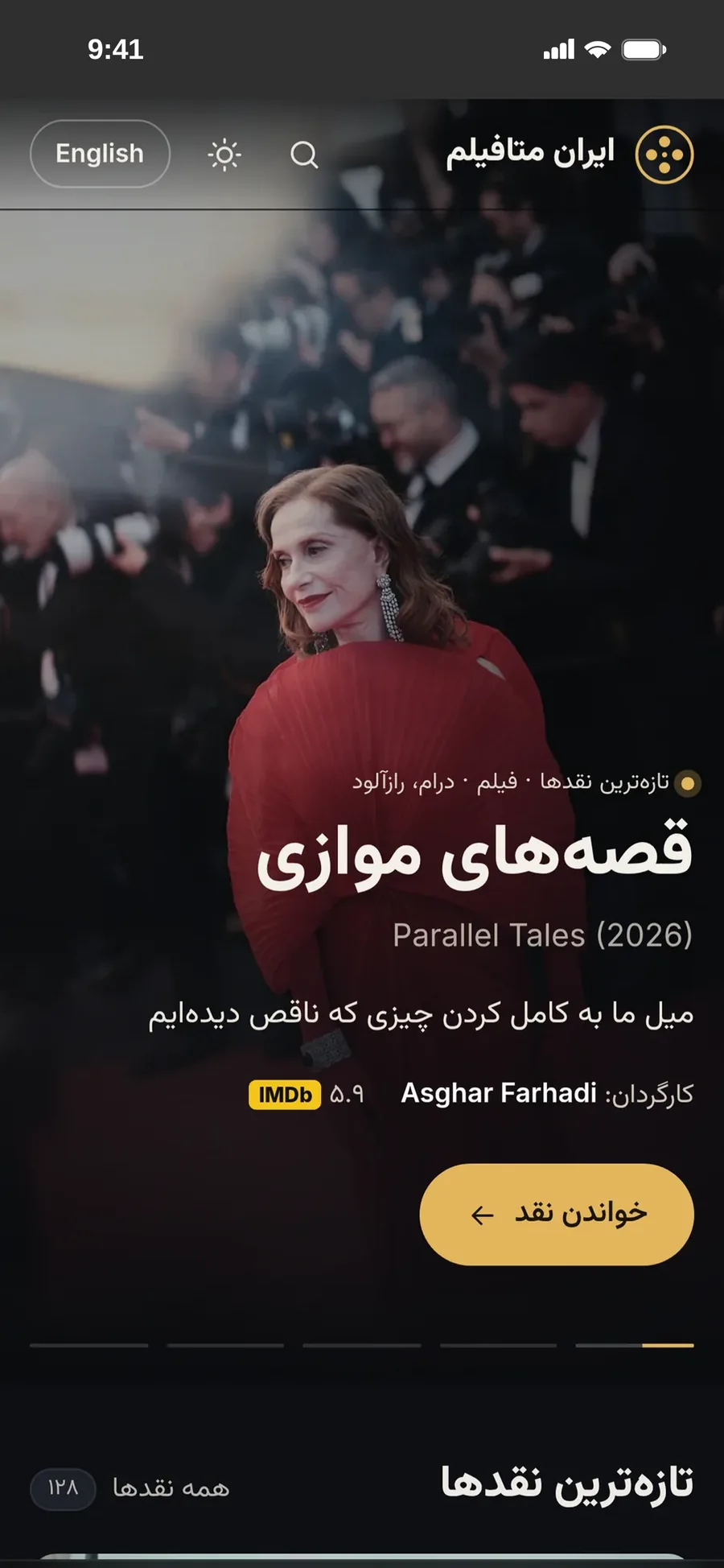
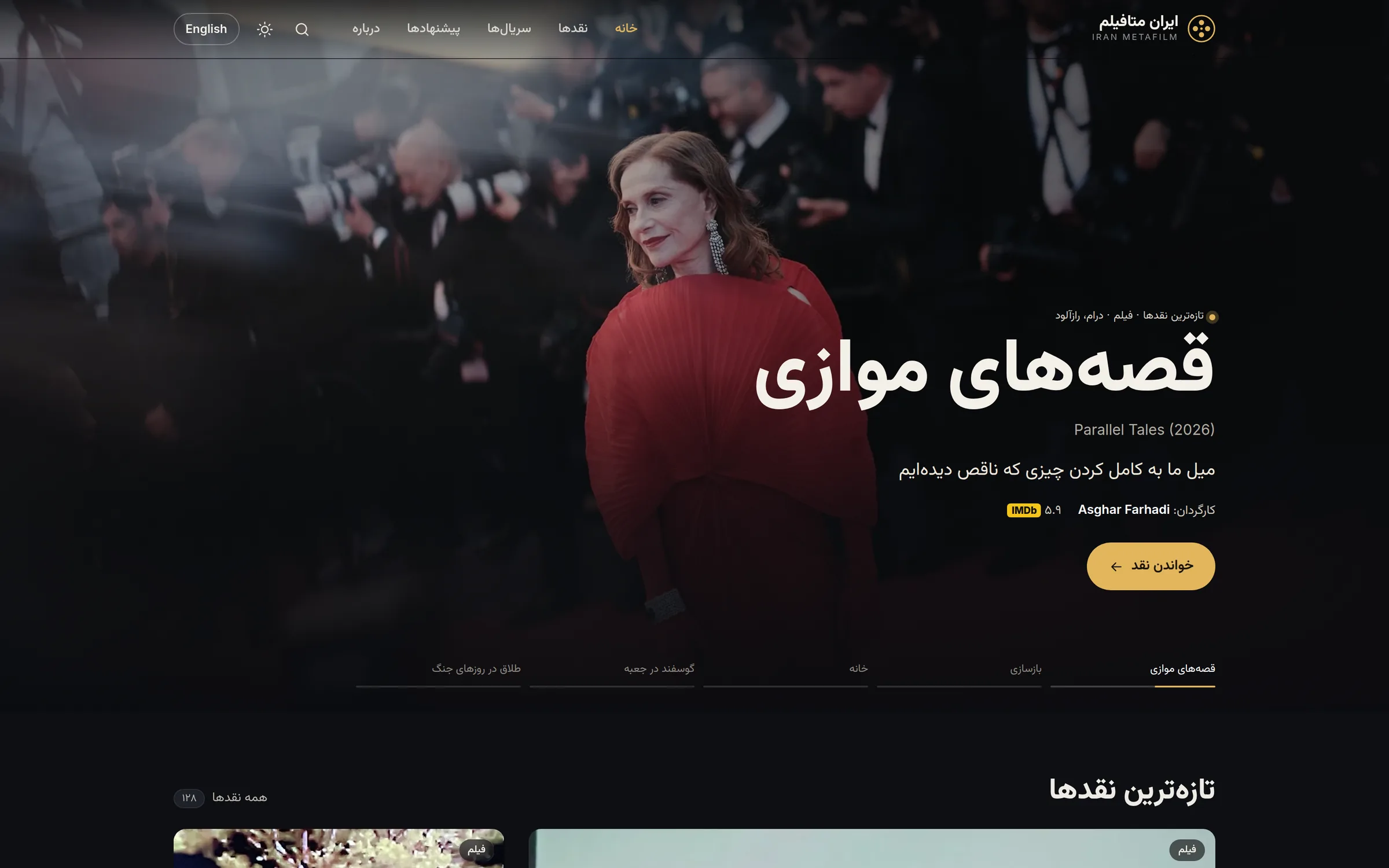
Each issue opens on one film, full-bleed, with the critic's line in large Persian type.
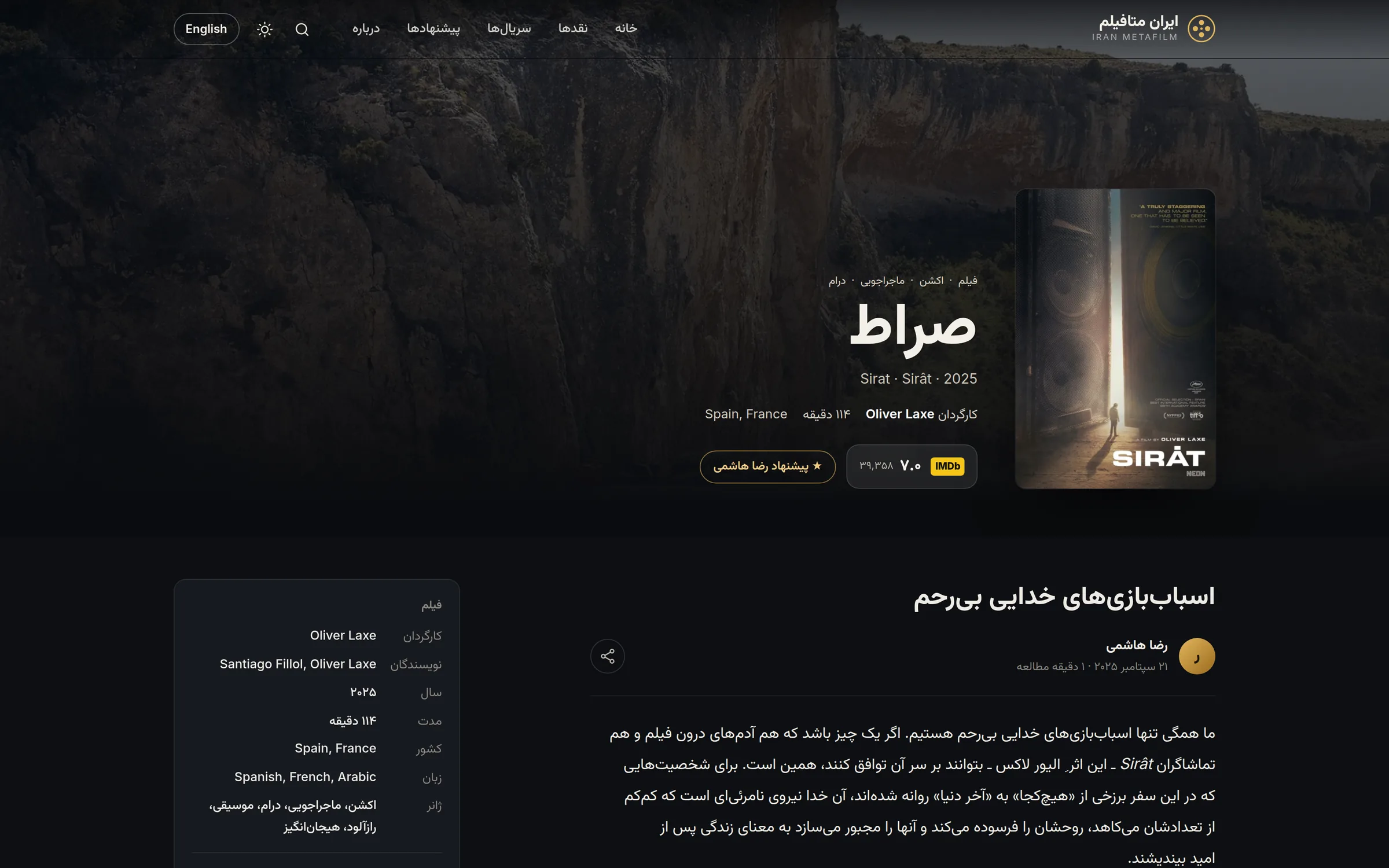
Poster, credits and the review itself, set right-to-left for comfortable long reading.
Iran Metafilm is a Persian-first film and series review site with an English edition, built together with the writing studio behind it. Everything below is in the running code today.
Built for long reading on a phone first.
Up to five featured reviews open the home page as full-bleed slides that advance every seven seconds, pause under the mouse and swipe on touch in the right direction for right-to-left reading.
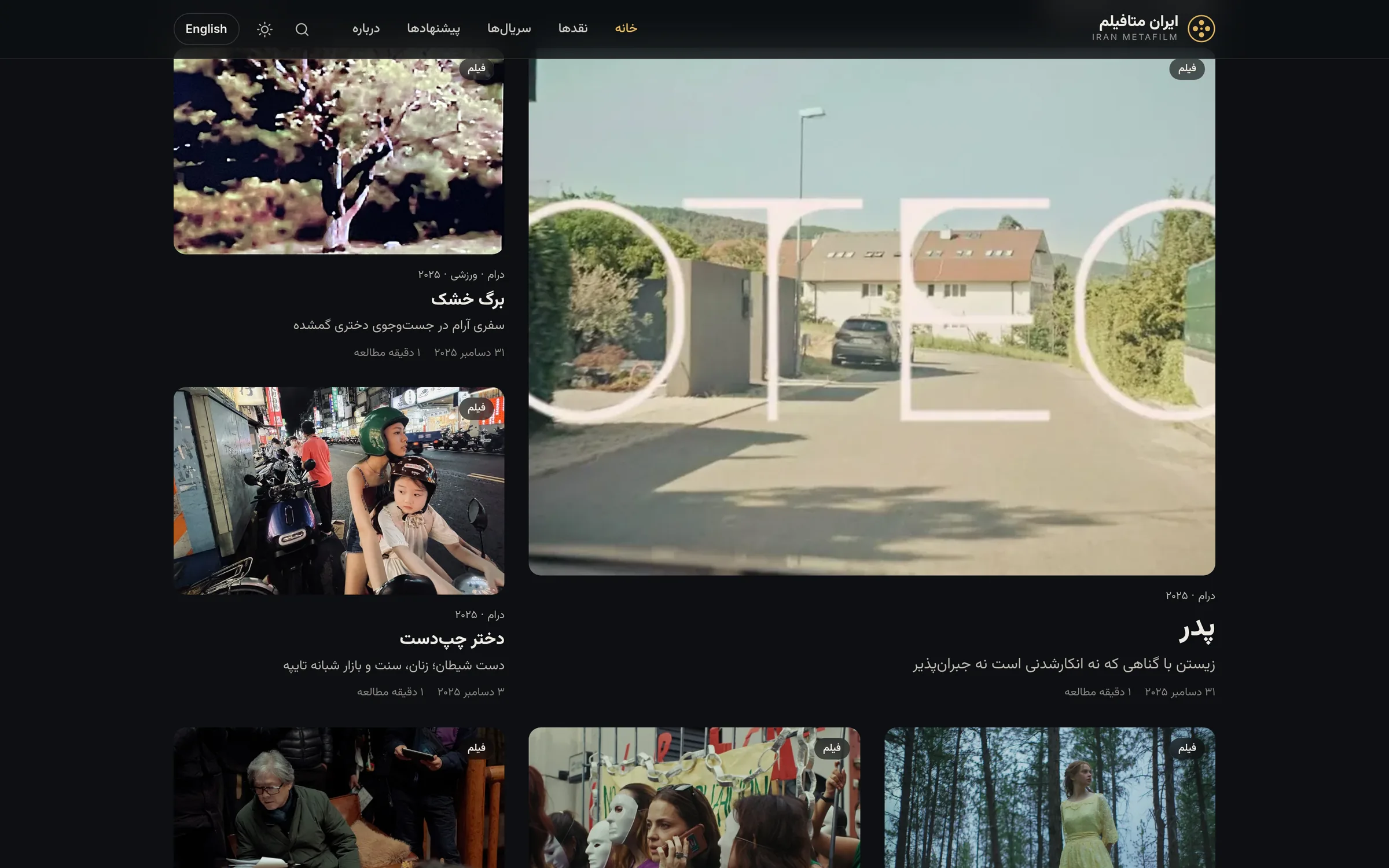
Latest reviews, the critic's picks, series, documentaries, top-scored films, popular genres and a count of reviews per year are each built from the live catalogue.
Each review shows the poster, a backdrop header, the critic's score next to the IMDb rating, director, writers, cast with photos, runtime, country and language.
Film stills open full size in a lightbox that closes on a tap or the Escape key.
Every review suggests four related reviews from the same genre, topped up with the newest ones, plus previous and next links in publishing order.
Reviews show an estimated reading time, and the share button opens the phone's share sheet or copies the link with a short confirmation.
The site follows the system theme on first visit and remembers the reader's choice after that.
On narrow screens a fixed bottom tab bar replaces the top menu and leaves room for the iPhone home indicator.
Press / or Ctrl/Cmd+K to open search, see poster thumbnails as you type, and move through results with the arrow keys and Enter.
Search matches English, Persian and original titles, review headlines, directors and cast.
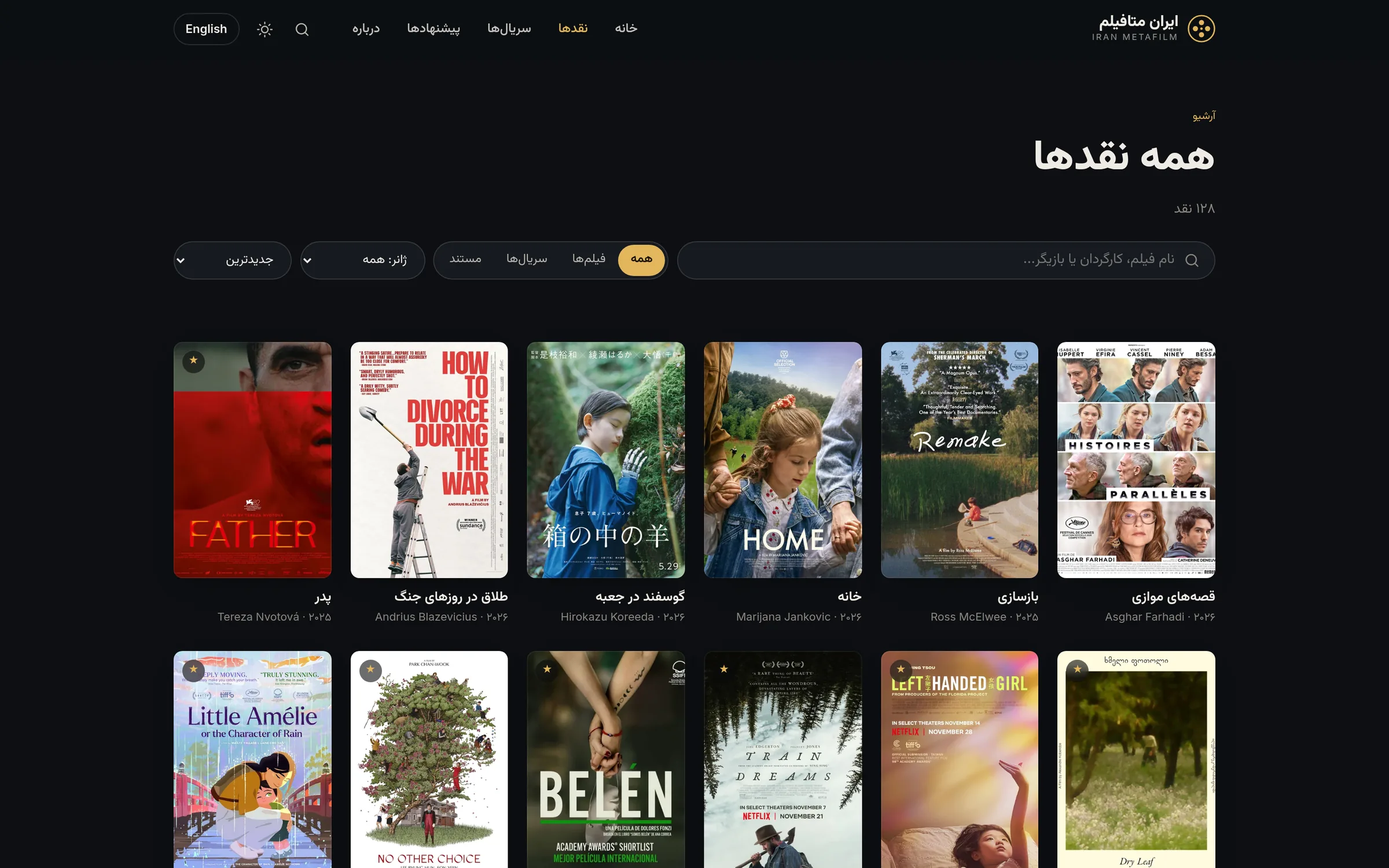
The archive filters by genre, kind (film, series, documentary, short), publishing year and recommended only, 24 reviews per page.
Readers can sort the archive by newest, oldest or the critic's score.
Persian is the original; English mirrors it on the same URLs.
The Persian edition lives at the root and the English edition under /en/, and the language switch keeps the page and any filters.
The Persian edition prints digits in Persian and writes dates with Persian month names.
Persian is set in Vazirmatn, English in a Fraunces serif with Inter, and English reviews open with a drop cap.
When a review has no text in the reader's language, the page says so and shows the original.
Each edition has its own RSS feed of the 30 latest reviews, and the sitemap lists every review in both languages.
Pages carry language alternate links and social preview tags, and robots rules keep the studio out of search.
A writer types a title; the rest is filled in.
Search by any title or paste an IMDb link, and films already in the library are marked as such.
Picking a result fetches the poster, backdrop, up to six stills, the top ten cast with photos, director, writers, genres, runtime, rating and trailer link.
The Persian title of a film is looked up on Wikidata during import, and hand-corrected titles are kept on refresh.
Click any image to make it the cover, tick it to add it to the gallery, or drop in your own images (up to 20 at a time).
Buttons add bold, italic, headings and quotes, the text box grows with the text, and a live word count shows reading time.
Ctrl/Cmd+S saves in place and shows the time, and the browser warns before you leave with unsaved changes.
A score slider (which can be cleared), a recommend flag and a feature-on-home flag sit beside every review.
Publishing warns when no film is linked and refuses an empty review, and signed-in editors can open drafts at their real URL.
Translation is automatic, but hand edits always win.
OpenRouter, Anthropic, Google Gemini or OpenAI can do the translation, and keys are encrypted at rest and only ever shown masked.
Adding a key lists the models that account can use, and the chosen model is checked with a real short translation before it is saved.
Saving a Persian review translates the headline, summary and body in the background, with a status bar for translating, up to date, changed or failed.
Each field remembers which Persian text it came from, so only edited fields are translated again, and edits made mid-translation are caught.
Any English field can be switched to hand-edited, after which it is never overwritten and is flagged if the Persian later changes.
The translator gets the film's title, year and director, keeps paragraphs and formatting, and uses official English film titles.
Counts of published reviews, drafts, films, total reads and subscribers sit beside lists of reviews missing English or a linked film.
The dashboard lists the eight most recently edited reviews and the six most read.
A single list toggles featured and recommended on any review, saves instantly, and pages through 50 at a time with live search.
Studio search treats Arabic and Persian forms of the same letters as equal, so a title is found however it was typed.
Titles and plot can be edited in both languages, and a refresh pulls new data from IMDb without losing hand edits.
Every stored image is listed by kind, and deleting one removes all of its sizes.
Readers subscribe from the site in either language, and the studio lists subscribers and exports them as CSV.
The about page in both languages and the social links are edited from the studio, not in code.
Small site, careful foundations.
Admins add people as editors or admins, and everyone can change their own password.
Passwords are hashed with scrypt, logins are rate-limited, and an account locks for 15 minutes after five wrong passwords.
Logins, film imports, uploads, deletions and home page changes are recorded with who did them, and visitor addresses are stored only as a salted hash.
Every form carries a CSRF token, and pages send a strict content security policy, no-frame and no-store rules for the studio, and HTTPS-only headers.
Every image is checked, rotated upright and re-encoded to WebP at three sizes, and remote images are only fetched from known hosts.
The site installs as an app with shortcuts and icons, keeps recent pages and images in a capped cache, and shows an offline page when needed.
Each night a consistent database snapshot is compressed and the media folder mirrored, keeping the last 14 snapshots.
The critic's earlier Instagram reviews were imported in one repeatable pass, and the site runs as one non-root container with a health check.